Understanding THCa
Explore the science and benefits of Tetrahydrocannabinolic Acid.
THCa, or Tetrahydrocannabinolic Acid, is a naturally occurring, non-psychoactive cannabinoid found in raw and live cannabis. Unlike THC (the compound known for producing a “high”), THCa doesn’t bind effectively to CB1 receptors in the brain—meaning it won’t cause intoxication in its natural form.
As cannabis is dried, cured, or heated, THCa converts into THC through a chemical reaction known as decarboxylation. This transformation alters the molecular structure by removing a carboxyl group (COOH), enabling it to bind to the brain’s cannabinoid receptors.
| Feature | THCa | THC |
|---|---|---|
| Psychoactive | ❌ Non-psychoactive | ✅ Psychoactive |
| Found In | Raw/live cannabis | Heated/cured cannabis |
| Converts To | THC (via heat/time) | — |
| Interaction with CB1 Receptors | Minimal | Strong (induces high) |
Decarboxylation is the process by which THCa becomes THC. This occurs through smoking, vaping, baking, or even extended drying/curing.
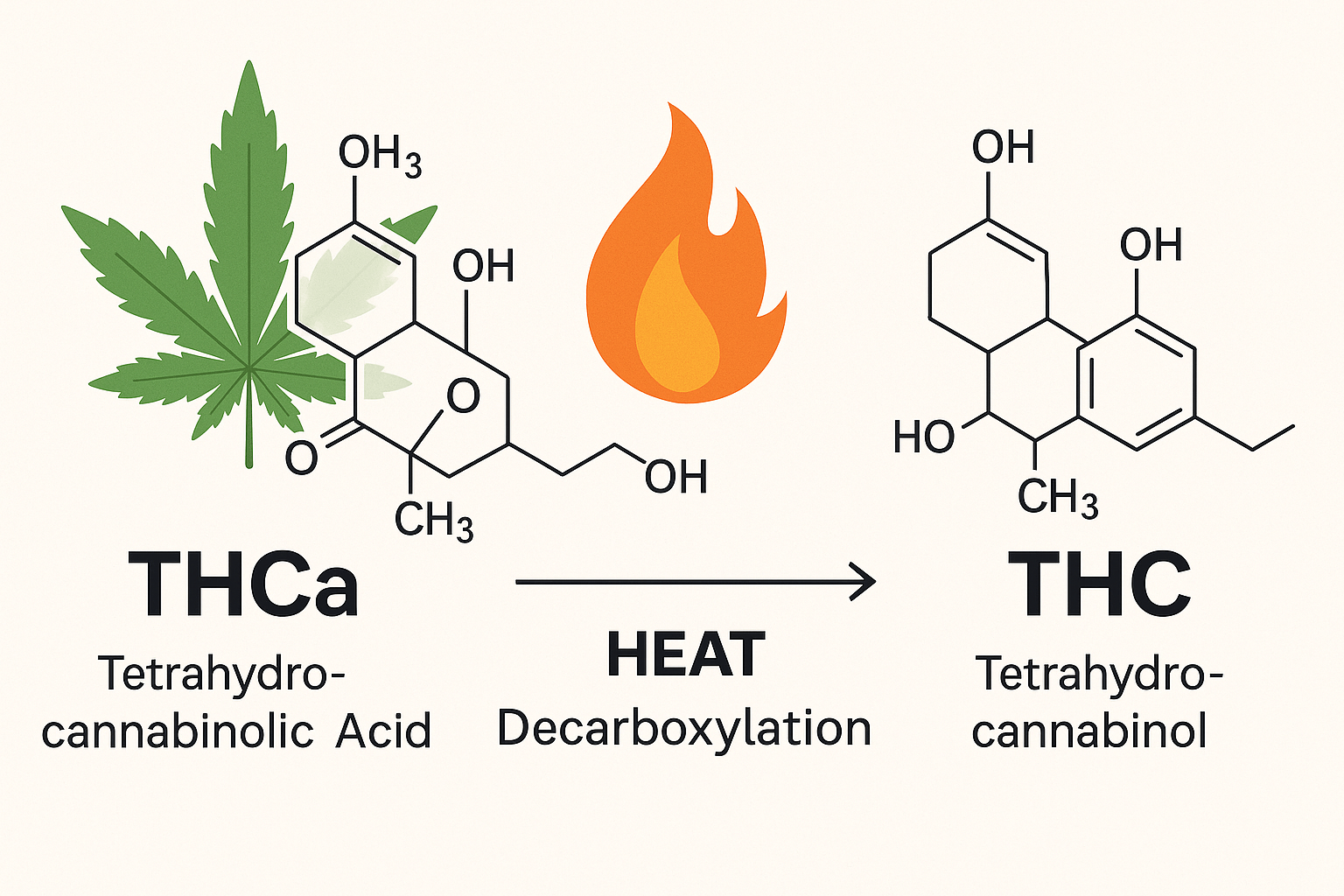
Though more research is needed, early studies and anecdotal evidence suggest THCa may provide several therapeutic benefits—all without the high of THC:

🧬 Anti-Inflammatory: May help reduce inflammation in conditions like arthritis, lupus, and other autoimmune disorders.
🧠 Neuroprotective: Shown to possibly protect brain cells and slow progression of neurodegenerative diseases like Parkinson’s or Alzheimer’s.
🤢 Anti-Emetic: May ease nausea and vomiting, offering a potential benefit for chemotherapy patients or those with digestive issues.
🛡️ Anti-Proliferative: Preliminary studies suggest THCa could inhibit the growth of certain cancer cells, though more clinical research is necessary.
THCa is not a substitute for medical treatment. Always consult a healthcare professional before starting any cannabinoid-based regimen.
The information provided on this page is for educational purposes only and is not intended as medical advice. The statements made regarding these products have not been evaluated by the Food and Drug Administration.
Product effects can vary between individuals. Use responsibly and in accordance with local laws and regulations.